
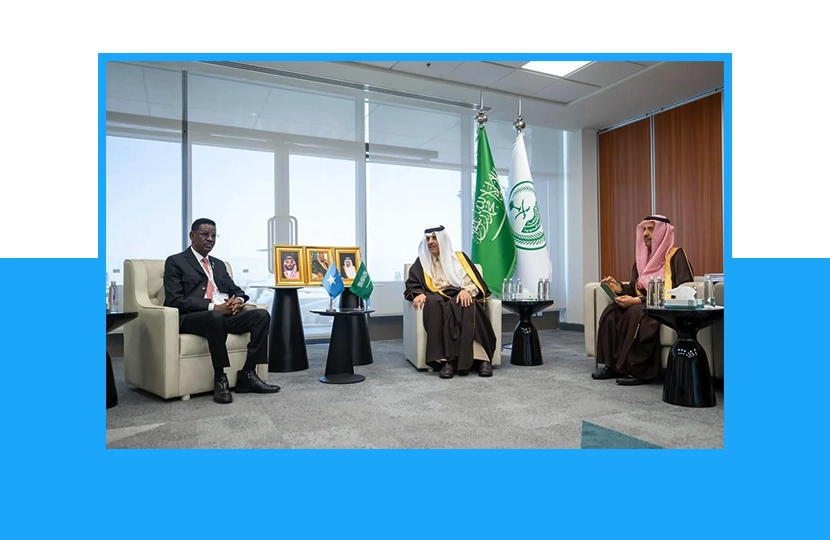
Riyadh (SPT)- The Kingdom of Saudi Arabia has reportedly stepped up its support to Somalia in efforts to assist with national reconstruction and the enhancement of Somali security institutions. Discussions held in Riyadh involved Somalia’s Interior Security Minister, Abdullahi Sheikh Ismail (Fartaag), and the Saudi Deputy Minister for Interior Affairs, Prince Abdulaziz bin Ayyaf. According to reports, both sides reaffirmed a commitment to robust security cooperation, including counterterrorism collaboration and exchange of security expertise.
The meeting also highlighted a signed defence cooperation agreement between Somalia and Saudi Arabia, signed by Somali Defence Minister Ahmed Moallim Fiqi and Saudi Defence Minister Prince Khalid bin Salman. This agreement is understood to deepen bilateral cooperation on defence and military matters, covering aspects such as training, institutional capacity building, and broader strategic support.
Observers note that Riyadh’s increased engagement comes amid broader shifts in the Horn of Africa’s geopolitical landscape, as Somalia seeks to solidify international partnerships following tensions with other regional actors. Saudi Arabia’s enhanced role appears to coincide with its position on Somalia’s unity and territorial integrity, particularly as Mogadishu pursues wider diplomatic and security cooperation.
Strategic Analysis (SPT)
The expansion of Saudi support to Somalia represents a significant strategic partnership with implications for sovereignty, regional balance, and external influence. From a policy perspective, it is crucial that such cooperation be anchored in the Federal Government of Somalia’s authority, oversight, and legal framework to avoid diluting federal prerogatives or creating parallel structures of influence.
SPT emphasises that while external support—especially in security and reconstruction—can strengthen Somalia’s institutional capacity, it must not come at the expense of sovereignty or federal decision-making. The Somalia–Saudi partnership should, therefore, be structured around clear terms that reinforce national leadership over security strategy, budgetary control, and defence policy, aligning with constitutional authority and international norms.
This approach ensures that increased support contributes to national stability and resilience without inadvertently inviting external leverage over internal governance or security priorities. It also maintains Somalia’s consistent position on territorial integrity amidst regional rivalries and diplomatic contestations affecting the Horn of Africa.


